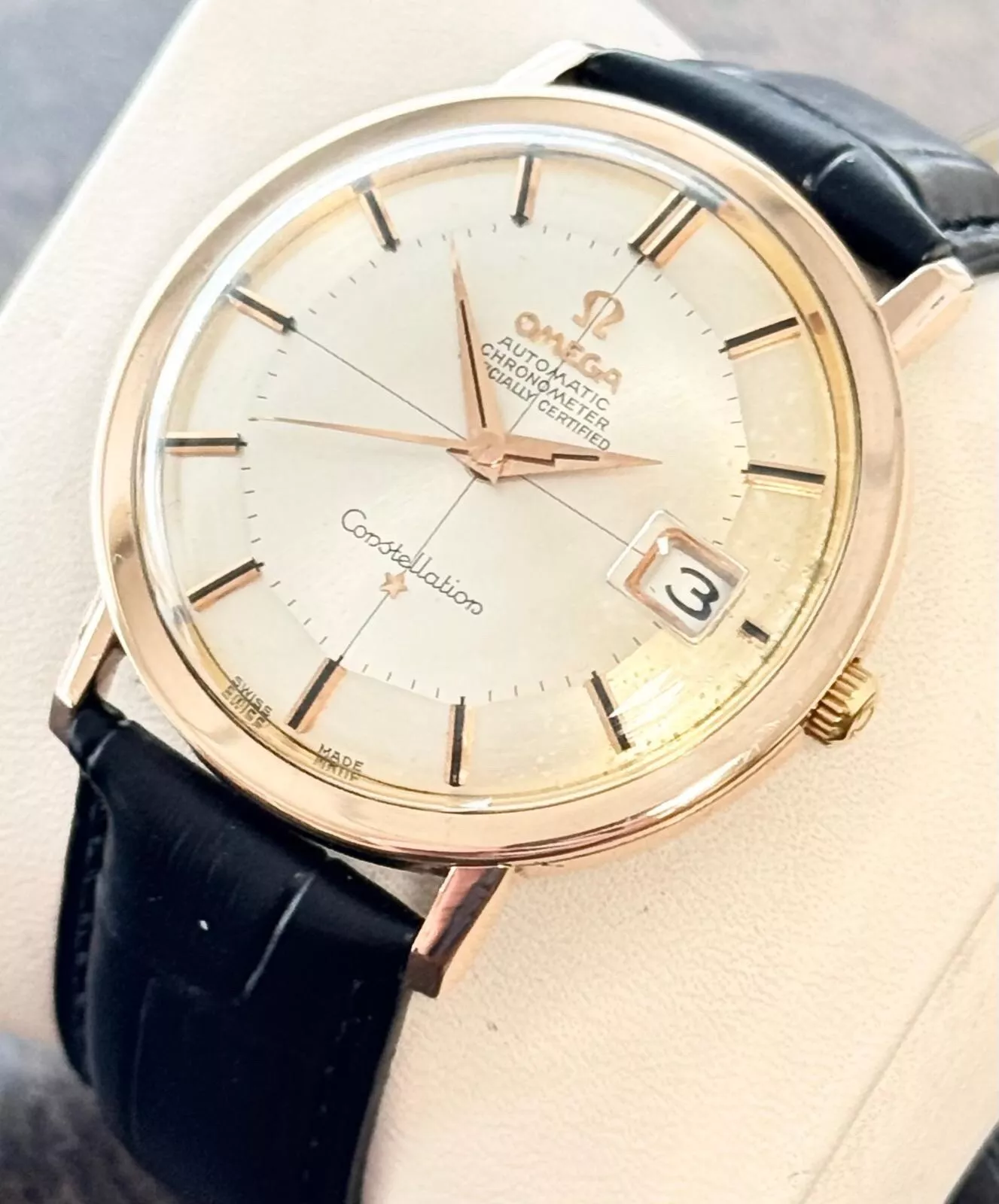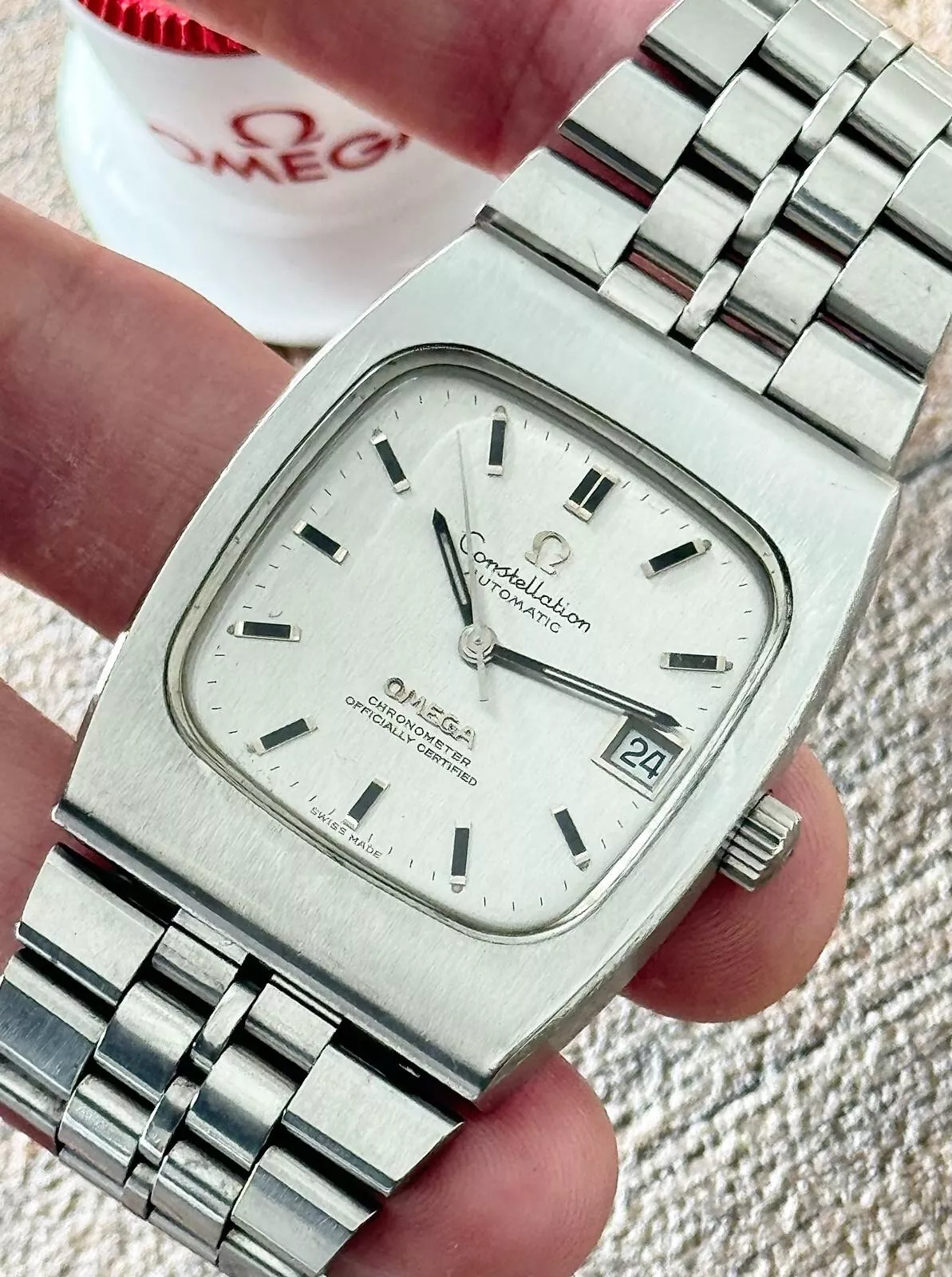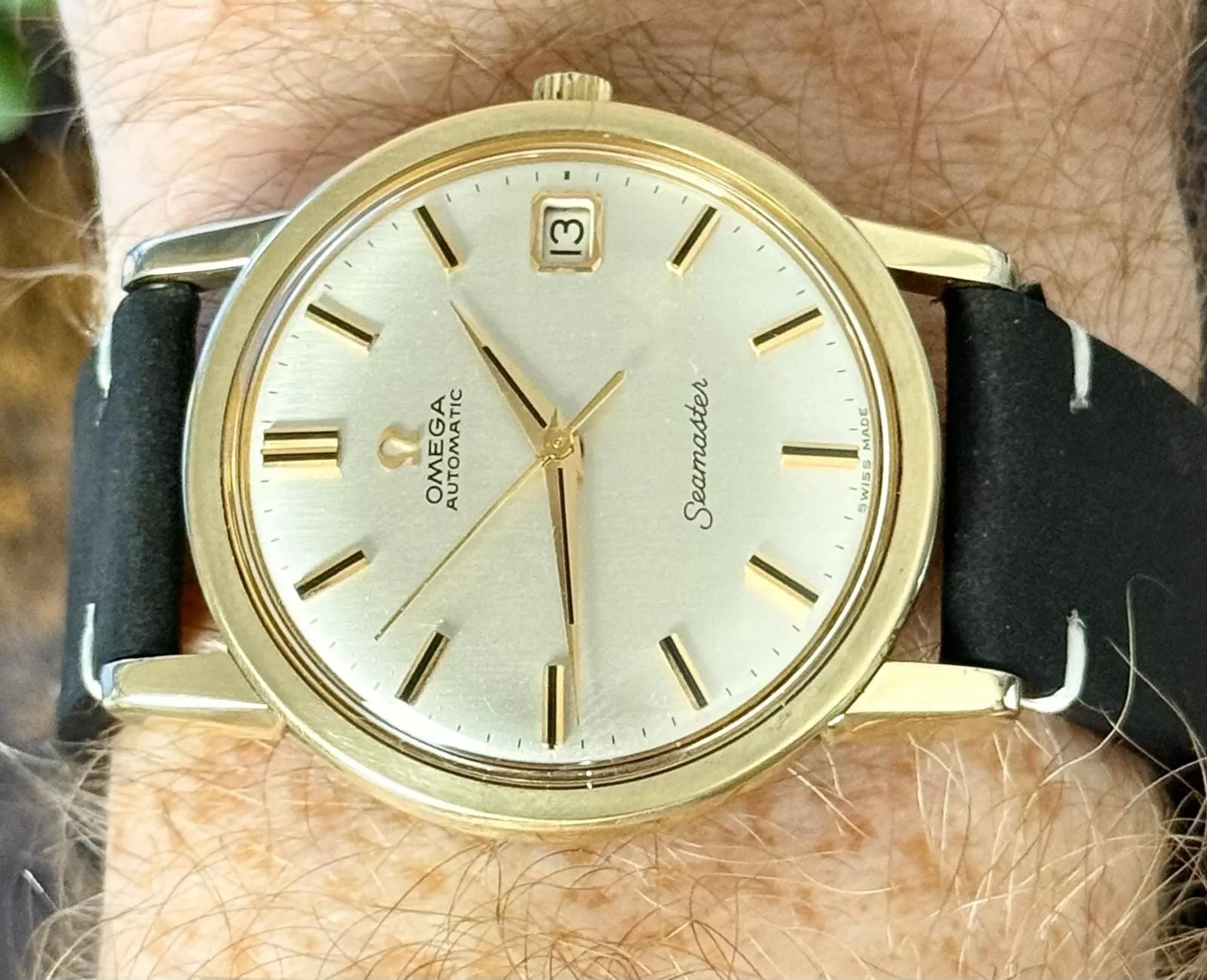
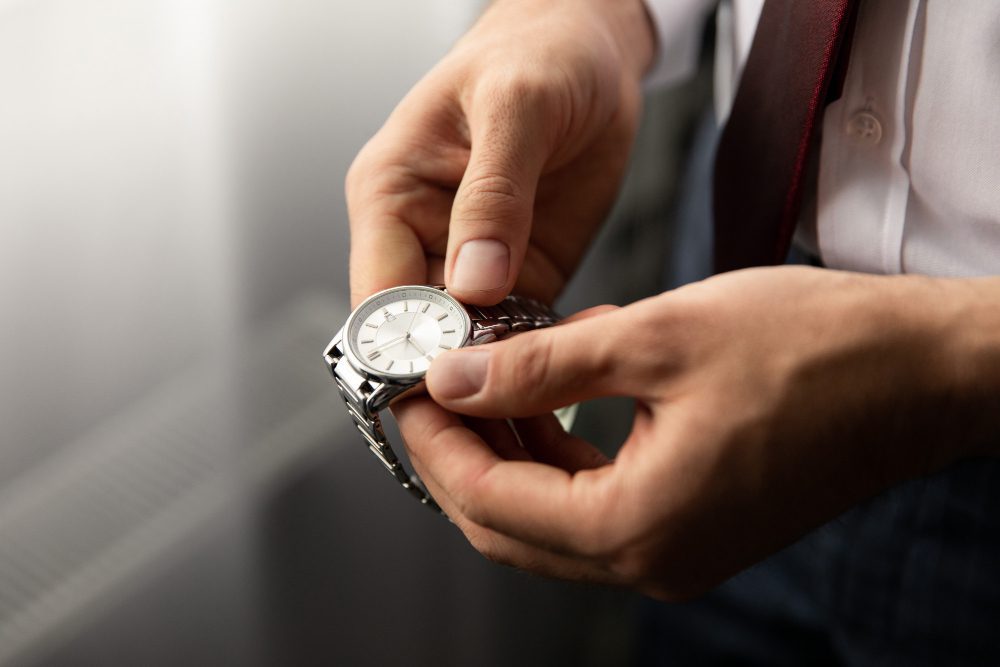






The right watch should feel as though it belongs on the wrist. Alongside the design, movement and history of a timepiece, its proportions play an important role in how comfortable and balanced it feels when worn.
This is particularly relevant when choosing from a collection of vintage and pre-owned watches. Older watches are often smaller than their modern counterparts, but their carefully considered proportions allow them to retain an elegant presence on the wrist.
This watch size guide explains how to measure your wrist for a watch, understand the measurements provided in a product listing and select a case size that complements your wrist.
How to Measure Your Wrist Size for a Watch
A flexible tape measure provides the easiest way to measure your wrist. Wrap it around the point where you would normally wear a watch, which is usually just behind the wrist bone.
The tape should sit close to the skin without feeling tight. Make a note of the measurement in centimetres or inches and repeat the process to check that the figure is accurate.
If you do not have a flexible tape measure, use a piece of string or a narrow strip of paper. Wrap it around your wrist, mark the point where the two ends meet and then measure the length against a ruler. One inch is equal to 2.54cm if you need to convert the measurement.
How Tight Should a Watch Be?
A watch should sit securely enough to remain in place without pinching the skin or restricting movement. As a general guide, you should be able to slide one fingertip beneath the fastened strap.
Some people prefer a close fit, while others like their watch to move slightly on the wrist. The aim is to find a balance that feels comfortable throughout the day.
A leather strap can be adjusted using its existing holes. Metal bracelets are normally resized by adding or removing links. When purchasing online, check that the stated strap or bracelet length will accommodate your wrist measurement.
Understanding Watch Measurements
Wrist circumference is only one part of choosing the right watch. Case diameter, lug-to-lug length, thickness and strap width all influence how a timepiece appears and feels when worn.
Case Diameter
Case diameter is the width of the watch case, normally measured from one side to the other without including the crown.
A larger diameter gives a watch greater presence, while a smaller diameter tends to create a more restrained appearance. However, diameter alone does not tell you exactly how a watch will fit. Two watches with the same case diameter can wear very differently because of their case shape, dial design and lugs.
Lug-to-Lug Length
The lugs are the parts of the case that hold the strap or bracelet. Lug-to-lug length is measured from the tip of the upper lugs to the tip of the lower lugs.
This is one of the most useful measurements when comparing watch size to wrist size. Long, straight lugs can make a case appear larger, while shorter or curved lugs allow the watch to sit more closely around the wrist.
Ideally, the lugs should remain within the edges of the wrist rather than extending beyond them.
Case Thickness
Case thickness is measured from the back of the case to the highest point of the crystal.
A slim dress watch will usually sit neatly beneath a shirt cuff and feel discreet on the wrist. A thicker sports watch can feel considerably more substantial, even if it has the same case diameter.
Strap Width
The width and material of the strap also affect the appearance of a watch. A broad metal bracelet can make a case feel more prominent, while a tapered leather strap often gives a lighter and more traditional finish.
The relationship between the case and strap is particularly important in vintage designs, where balanced proportions are a defining feature of the watch.
Watch Size by Wrist Size
There is no fixed rule for choosing the correct watch size. Personal taste, wrist shape, case design and lug-to-lug length all influence how a watch fits.
A smaller vintage watch can look refined on a larger wrist, while a broader case may still suit a smaller wrist if its lugs are short and curved. Dress watches traditionally have more modest proportions, while diving watches, chronographs and other sports models are often larger.
The best guide is to compare the watch’s full measurements with a timepiece you already find comfortable
Why Vintage Watches Often Wear Smaller
Many vintage men’s watches from the 1950s, 1960s and 1970s have case diameters between approximately 32mm and 36mm. These sizes were standard during their respective periods and remain an important part of their character. Our guide to vintage watch designs over the years provides further insight into how watch styles have evolved.
Although compact by modern standards, vintage watches do not necessarily look undersized. A slim bezel, open dial or long lugs can give a smaller case more presence than its diameter might suggest.
The vintage Omega Seamaster collection at Authentic Watch Co. includes models with case diameters around 33mm, 34mm and 35mm. These proportions reflect the understated style associated with many mid-century Omega watches.
When considering a vintage watch, it is helpful to judge it according to the design conventions of its period. Choosing a larger size simply to match a modern trend can overlook the balance and elegance that made the original design distinctive.
How Should a Watch Sit on the Wrist?
A well-proportioned watch will normally sit just behind the wrist bone, with the dial centred across the top of the wrist. The lugs should follow the shape of the wrist without extending beyond its edges.
The crown should not press into the back of the hand when the wrist bends. If it does, the strap may need adjusting or the watch may need to sit slightly higher.
Weight is another consideration. A watch on a substantial metal bracelet will feel different from a similarly sized model on leather. Comfort should therefore carry as much importance as visual proportion.
Choosing a Watch Size Online
When buying a watch online, compare your wrist measurement with the dimensions shown in the product description. Look beyond the case diameter and consider the lug-to-lug length, thickness and strap or bracelet length.
If you already own a watch that fits comfortably, compare its measurements with those of the watch you are considering. If a 35mm watch with a 42mm lug-to-lug measurement fits well, a watch with similar proportions is likely to sit in a comparable way.
You can also create a simple paper outline using the listed case diameter and place it on your wrist. This will not recreate the full depth or shape of the watch, but it can offer a rough impression of its visual size.
Photographs can make a watch appear larger or smaller depending on the angle and distance from which they were taken. For further advice, read our guide to buying vintage watches online.
Choosing a Vintage Watch with Confidence
Learning how to measure your wrist size for a watch makes it easier to compare different designs, but the figures should support your personal preference rather than determine it entirely.
A smaller vintage watch can offer a discreet and elegant fit, while a larger case creates a stronger presence. Collections from brands such as Tudor and IWC also demonstrate how different case shapes and proportions can affect how a watch wears.
The right choice is ultimately the watch that feels comfortable and reflects the style you want.
Each of our individual listings provides detailed information about the case, movement, strap and overall condition of each unique timepiece. If you have any questions about a particular watch or would like to arrange a viewing, contact us and our team will be happy to help.